Knesset Election: Parties and Thresholds
Ten major lists and three threshold contenders vie for seats under the 3.25% rule.
By Kevin Brooks ·
Israeli voters cast ballots on October 27, 2026, to select members of the next Knesset. The election determines which political blocs hold the power to form a government. The outcome will reshape the balance of power in Jerusalem.
Three main blocs and independent lists compete for representation. The right-wing bloc includes Likud, Otzma Yehudit, Religious Zionist Party-Zehut, Shas, and United Torah Judaism. The opposition bloc features Yashar, B’Yachad, the Democrats, and Yisrael Beytenu. Arab-Israeli parties, including the Joint List and Ra’am, run independently but often influence coalition math.
Leaders define the platforms for these lists. Prime Minister Benjamin Netanyahu heads Likud, which emphasizes security and Jewish nationalism. Former Prime Minister Naftali Bennett leads B’Yachad, focusing on economic growth and haredi enlistment. Former IDF Chief of Staff Gadi Eisenkot commands Yashar, a centrist group prioritizing government reform. Finance Minister Bezalel Smotrich co-leads the Religious Zionist Party with Moshe Feiglin, advocating for expanded settlements and judicial reform.
The electoral threshold of 3.25% acts as a financial barrier to entry. Parties must secure at least this percentage of the national vote to win a seat. This rule eliminates fringe lists and forces voters to choose between established parties or risky third options. A small shift in voter preference can determine whether a party enters the parliament or disappears.
Three parties hover near this critical line. The People of Israel, led by former general Ofer Winter, supports Netanyahu but demands new leadership outside the establishment. It requires haredi enlistment for any coalition and supports voluntary emigration from Gaza. The Reservists-Economic Party, headed by Yoaz Hendel and Yaron Zelekha, combines security stances with economic reform. It insists on a universal conscription law before joining a government. The Haredi Public Party, led by Moti Leitner, seeks to replace Shas and United Torah Judaism by pushing for broader haredi service and core curriculum studies.
Policy differences sharpen the competition. Right-wing lists generally favor a hardline approach to security and settlements. Centrist and left-wing lists prioritize civil rights, education, and military equality. The Democrats, led by Yair Golan, emphasize liberal democracy and education reform. Yisrael Beytenu, under Avigdor Liberman, seeks to reduce religious party influence and toughen the stance against Hamas. These positions create distinct voting camps across the country.
The election will conclude with the counting of votes to determine the exact seat distribution. The 3.25% threshold will decide which of the three contested lists gain representation. The final tally will reveal which blocs can assemble a majority of 61 seats in the 120-member Knesset.
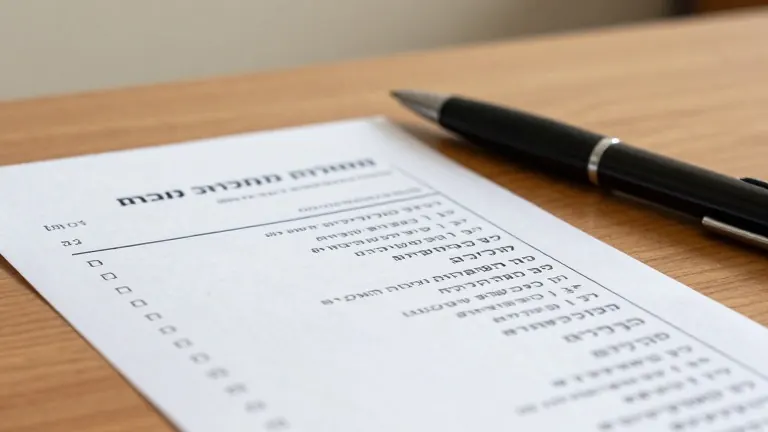
Voters use specific letters on the ballot to identify their chosen list. Likud is marked with the letters for Makhel. Yashar uses Derek. B’Yachad appears with Rak. The Democrats are identified by Emet. Yisrael Beytenu uses the letter L. Otzma Yehudit is marked with B. The Joint List uses Vdam. Ra’am is identified with Am. Shas is marked with Shin-Samekh. United Torah Judaism uses Gimel. Religious Zionist Party-Zehut is marked with T. People of Israel uses Kaph. The Reservists-Economic Party uses Dalet-Yod. The Haredi Public Party is marked with Zayin-Kaf.
Source: The Jerusalem Post