Israel Votes in High-Stakes Election as Right-Wing Blocs Clash
The first national vote since the 2023 Hamas attack pits Prime Minister Benjamin Netanyahu against a similarly right-leaning opposition, with analysts questioning whether the outcome will alter Israel's democratic structure or its policies toward Palestinians.
By Brandon Parker ·

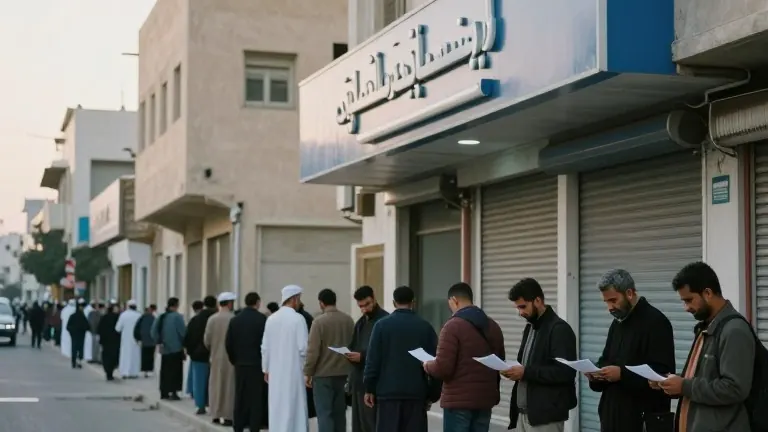
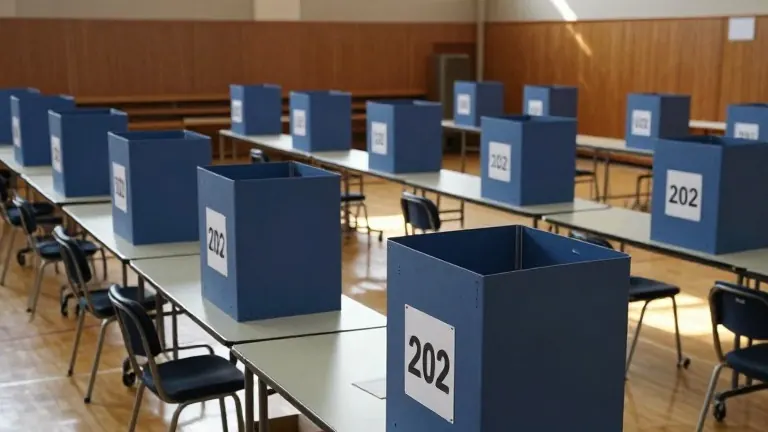
Israelis are casting ballots in a tightly contested election that marks the first national vote since the Hamas-led attack of October 7, 2023. The election follows a period of intense regional conflict, including Israeli military operations in Gaza, Iran, Lebanon, Yemen, Syria, and Qatar. Prime Minister Benjamin Netanyahu, who has served as the country's longest-serving leader, seeks to extend his tenure after leading a coalition that united far-right ultranationalist and ultra-Orthodox parties.
Netanyahu faces a dual challenge from his political rivals and the International Criminal Court, which issued arrest warrants for him on charges of war crimes in Gaza. He also continues a corruption trial involving charges of bribery, fraud, and breach of trust, which he denies. His opposition, a self-styled Zionist bloc, has adopted a right-wing approach to Israel's core challenges. The campaign focused on accountability for security failures before the 2023 attack, disputes over military service for ultra-Orthodox Jews, and the exclusion of Arab-led parties from potential governing coalitions.
Analysts argue that the political shift to the right predates the current government. The erosion of the political center accelerated after the collapse of the peace process and repeated security crises over recent decades. The 2018 Nation-State Law formally enshrined Jewish supremacy and facilitated the expansion of settlements in the occupied West Bank. Under the current Netanyahu government, this drift has intensified, with attempts to strip the Supreme Court of its review powers and flout rulings on conscripting the ultra-Orthodox minority, a group whose support sustains the coalition.
Finance Minister Bezalel Smotrich and National Security Minister Itamar Ben-Gvir have provided crucial support for the judicial overhaul launched in early 2023. Both ministers have also encouraged increased violence in the West Bank while deflecting blame for security lapses. Ahron Bregman, an Israeli analyst at King’s College London, noted that if Gadi Eisenkot replaces Netanyahu, the immediate change will be in the political atmosphere rather than core policy. He described Netanyahu as a deeply divisive figure who is viewed with extreme intensity by both supporters and opponents.
Yossi Mekelberg, a senior fellow at Chatham House, framed the election as a choice between a functioning democracy and one in name only. He warned that the outcome could determine whether Israel maintains its occupation of the West Bank or moves toward annexation. While a respect for the rule of law might return under an opposition government, analysts caution against expecting a major policy pivot. Bregman emphasized that Israel has turned sharply to the right since October 2023, and any new government will likely mirror this reality.
The ballot does not directly address the foreign and security policies that have led to the death of more than 74,000 people in Gaza and multiple wars across the region. Mainstream candidates have avoided discussing coalitions with Arab-led parties, such as Ra’am or the Joint List. Yehouda Shenhav-Shahrabani, an Israeli sociologist, stated that the ultra-Orthodox parties remain welcome in government, while the Arab-led parties representing one-fifth of the population are often excluded. He argued that the distinction in Israeli politics is often between Jews and Palestinians rather than democratic and anti-democratic forces.
Campaigns largely framed disagreements as questions of competence and timing rather than challenges to the treatment of Palestinians. Daniel Levy, a former Israeli government adviser, noted that no mainstream party is arguing the war in Gaza was a mistake. He described the treatment of Palestinians by the state and military as a consensus among Zionist parties, with differences resting on the role of settler militias. The election outcome will determine which right-wing configuration holds power, but few expect a fundamental break from the policies of the past year.
Source: Al Jazeera