Moscow Campus: African Students Shape Russia's New Continental Strategy
As the Russia-Africa Summit opens in Moscow, students at RUDN argue that personal ties and professional training are now central to the diplomatic dialogue.
By Ashley Mitchell ·
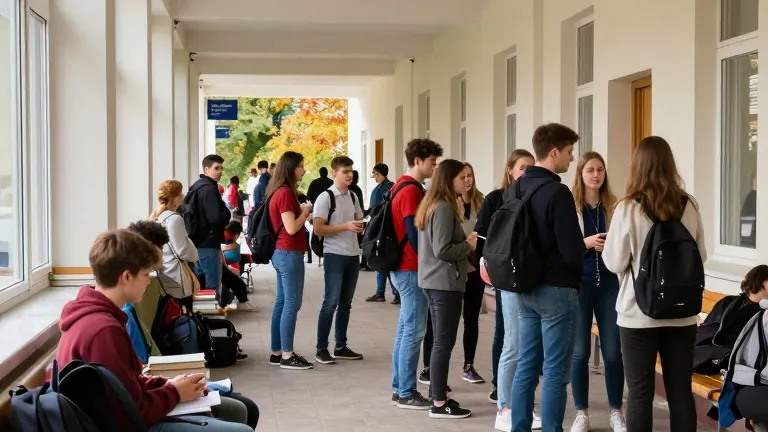
The Russia-Africa Summit begins in Moscow on Wednesday, but the most immediate evidence of the relationship is already visible on the campus of Patrice Lumumba Peoples’ Friendship University. Known locally as RUDN, the institution is filled with students speaking Russian, English, Arabic, and dozens of African languages. For these individuals, the partnership is defined by daily interactions rather than abstract geopolitical frameworks.
Keturah Musonda, a Zambian medical graduate, described Moscow as one of the best cities in the world, citing its transport system and cultural events. She noted that her time at RUDN included theatre, singing, and student union activities. Musonda said, “My student life was quite colourful.” Her positive view extends to the healthcare system, which she credits with improving her understanding of medical standards.
Musonda highlighted the accessibility of ambulances in Moscow, a feature she said was rare in Zambia. “In my country, I have never called an ambulance. No one in my family has ever called an ambulance,” she stated. She observed that Moscow treats paediatric care as a priority, with specialised clinics and equipment that contrast with the overstretched general departments common in many African hospitals.
Her education was funded by a Russian government scholarship, a programme that allows foreign applicants to apply online through Russian cultural centres. For Moscow, these scholarships represent a long-term investment. For students, they offer a route to qualifications that they intend to use in their home countries. Chinyama Kazombo, another Zambian medical student, said his goal is to bring back skills that Zambia needs in its healthcare sector.
Kazombo has spent five years in Russia, forming friendships with people from China, Asia, and across Africa. He participated in student events that introduced Zambian culture to Russian audiences, including a celebration of Zambia’s independence anniversary featuring dance and exhibitions. Kazombo said, “I’ll be working with Russians through my entire life … Russia is already part of who I am.”
Abobakr Mohamed Abbakar Khussein, a Sudanese lecturer at a Moscow university, views the Russia-Africa relationship as moving in a pragmatic direction. He noted that Sudan’s ties with Russia date back 70 years, beginning shortly after Sudanese independence. These links include archaeological work near Sudan’s ancient pyramids and the training of specialists in medicine, agriculture, and linguistics. Khussein sees potential in mining and nuclear cooperation with Rosatom, though he points out that the war in Ukraine has disrupted grain and cooking-oil exports, threatening food security across the continent.
Aaron Kasonde, a Zambian assistant professor at RUDN, believes agriculture could become a major area of cooperation. He noted that Africa has vast arable land and a youthful population, with an average age of about 19. Kasonde argued that the continent needs fertilisers, irrigation systems, and technology. Russia, a major producer of wheat and fertiliser, could help African farmers raise yields and reduce reliance on food imports.
Hafi Ahmed from Kenya pointed to the potential for broader economic cooperation. She stated that Kenya possesses an educated workforce, skilled medical professionals, and natural resources. Ahmed believes that Kenyans and Russians share more common ground than many assume, a view reinforced by her personal friendships. She sees cultural exchange as a key component of the bilateral relationship.
The students and lecturers at RUDN are not asking for Africa to choose a geopolitical side. They are seeking measurable benefits such as qualified professionals, modern healthcare, and food security. Kasonde stated that the question for African countries is whether a partnership supports national interests and development, regardless of whether the partner is Russia, China, the United States, or Europe.
Source: Al Jazeera