
GM Aims to Halve Vehicle Development Time With AI and Centralized Computing
Chief Product Officer Sterling Anderson explains how virtual testing and a common electrical architecture will replace traditional physical prototyping cycles.
By Ashley Mitchell ·
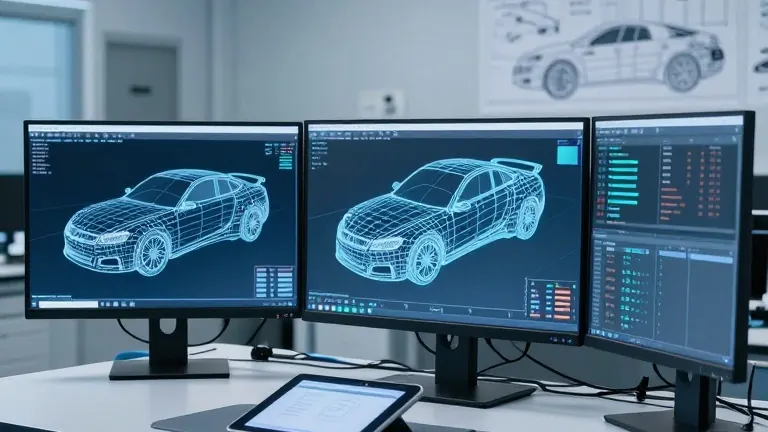
General Motors has announced a strategy to cut vehicle development timelines from four or five years to just over two. The automaker plans to achieve this compression by integrating artificial intelligence, centralized computing, and virtualized engineering into its design process.
GM unveiled these plans during a recent event in New York City. The presentation highlighted a new tech roadmap that includes AI-driven development, advanced battery technologies, and high-powered vehicle computers. The company also confirmed its focus on autonomous driving capabilities.
GM is implementing this shift while facing challenges from Chinese electric vehicle manufacturers that are expanding globally. Simultaneously, the company is managing the costs of software development alongside multibillion-dollar investments in next-generation battery plants.
Before the announcement, GM had already been developing hands-free driving automation and prototyping new battery chemistries. The recent event served to show how these individual technologies connect within a new "intelligence-defined vehicle" framework.
Sterling Anderson, GM's chief product officer, stated that the core goal is to make vehicles smarter. He described the car as becoming a trusted intelligent companion. Anderson noted that virtualizing tests allows engineers to run thousands of simulations quickly, providing better coverage and safety insights than traditional physical crash tests.
Anderson explained that safety-critical AI inference runs onboard the vehicle to avoid latency issues. Non-critical features, such as OnStar interactions, may still rely on cloud data but are being optimized for faster local processing. This approach ensures that critical decisions are not delayed by network connectivity.
The company is rolling out a common electrical system across its portfolio to reduce complexity. This standardized hardware allows software engineers to work more efficiently, similar to how smaller companies with fewer models operate. GM will differentiate brands like Buick and GMC through aesthetics and interaction models rather than underlying engineering components.
Regarding autonomy, Anderson argued that personally owned vehicles are a better path to full self-driving than regional robotaxis. He believes that personal vehicles can expand from road-type specific settings to broader coverage, whereas robotaxis remain limited to bounded regions.
The system will designate specific roads for autonomous operation. Drivers will receive a countdown warning, such as ten minutes, before the vehicle requires human control. If the driver does not take over, the car will pull over to a safe state and stop. Anderson said the company is not designing a Level 3 system where control transfers dynamically in traffic.
GM intends to use this approach to handle nuisance situations, such as blocked intersections, by keeping a human in the loop for non-safety-critical scenarios. The company aims to reach a state where self-driving is possible everywhere at all times, but it will follow a different path than the regional models currently used by competitors.
Source: The Verge
More Business · Buyer Beware · Report a business · Got a Story?